

What is wrong with the construction area sign in this picture?
When designing a temporary traffic control setup plan, it is critical to know the expected duration of the work activities. The California Manual on Uniform Traffic Control Devices (CA MUTCD) defines long, short, and intermediate-term stationary, short duration, and mobile setups and has different requirements for each.
Read more: The duration of your temporary traffic control setup makes a difference

The CA MUTCD says,
The function of channelizing devices is to warn road users of conditions created by work activities in or near the roadway and to guide road users. Channelizing devices include cones, tubular markers, channelizers (CA), portable delineators, vertical panels, drums, barricades, and longitudinal channelizing devices.
Read more: What is the difference between a channelizer, delineator, and tubular marker?
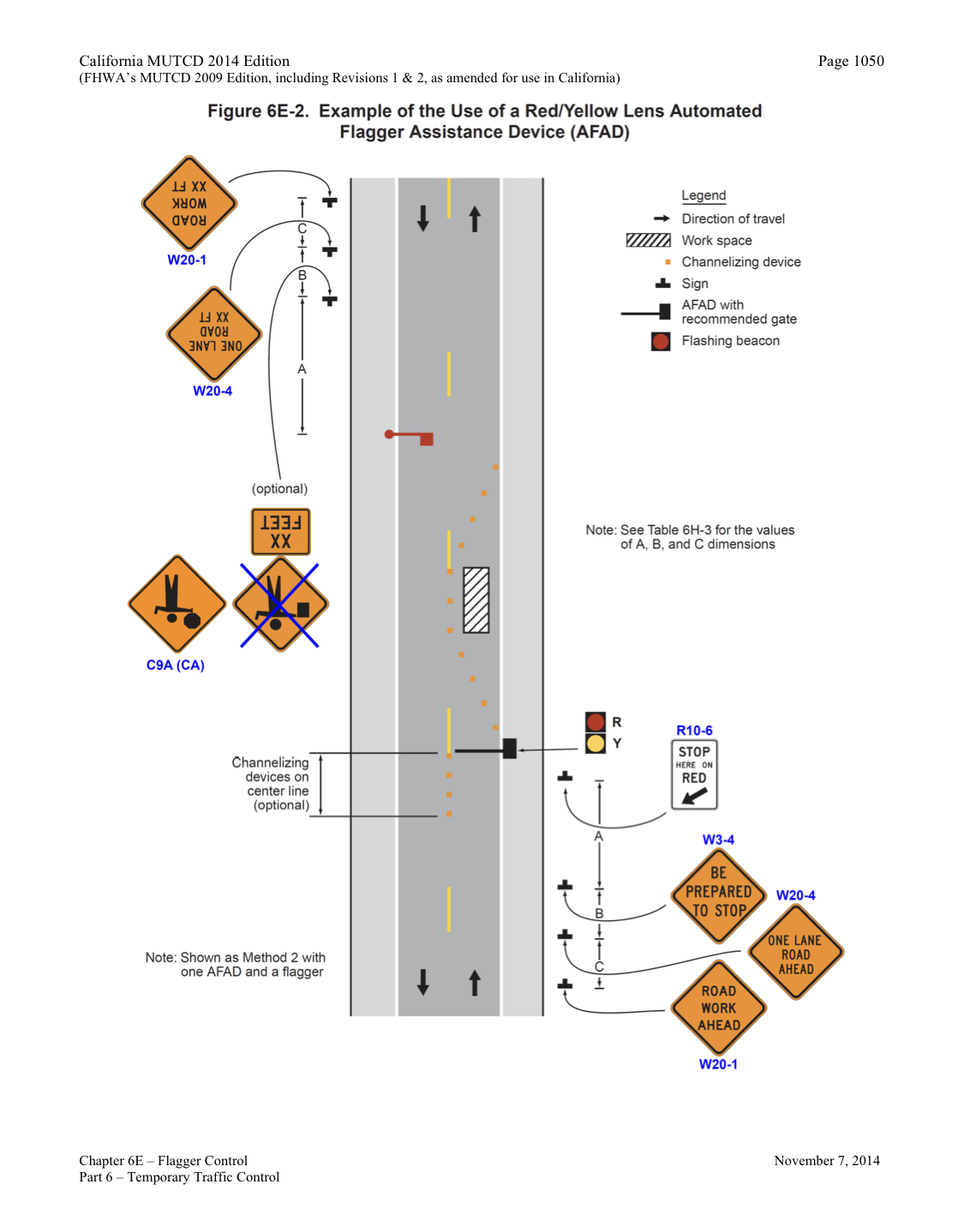
With the revision of Caltrans standard drawing T13 on October 18, 2019, Caltrans is promoting the use automated flagger assistance devices for one-way reversible lanes. These AFADs allow the flaggers operating them to remain safely off the roadway.


When is it ok to use black paint to cover unwanted pavement markings?
Read more: When is it ok to use black paint to cover unwanted pavement markings?

There are very specific rules contained in the CAMUTCD as to what signage and striping is required when there is an open trench in or adjacent to the roadway. The requirements are based on the trench depth and distance from the roadway.
What is the difference between Type I, II, and III barricades? The major difference is the surface area of retroreflective material, and therefore the visibility of the barricade.